Showing posts with label Grace. Show all posts

Sunday, May 18, 2025

The Difference Between חֵן (Chen) and חֵסֵד (Chesed)


What is the difference between חֵן and חֵסֵד in the HebrewBible?

In the Hebrew Bible, the terms חֵן (pronounced chen) and חֵסֵד (pronounced chesed) are distinct concepts, though both are often translated into English in ways that can obscure their nuances (e.g., as "grace," "favor," or "kindness"). Below, I’ll clarify their meanings, usage, and differences based on their biblical context and Hebrew lexicography.


חֵן (Chen)

  • Meaning: Chen refers to favor, grace, or charm, often describing an unmerited positive disposition or approval from one party toward another. It can also imply beauty or pleasantness in a person or thing that evokes favor.
  • Key Characteristics:
    • Chen is often about receiving favor or approval, either from God or humans, without necessarily implying a covenantal or ongoing relationship.
    • It emphasizes a quality that makes someone or something pleasing or attractive, sometimes in a subjective or aesthetic sense.
    • It is not inherently tied to obligation or loyalty but is more situational, often describing a moment of kindness or acceptance.
  • Biblical Examples:
    • Genesis 6:8: "But Noah found favor (chen) in the eyes of the Lord." Here, chen indicates God’s gracious favor toward Noah, singling him out for salvation.
    • Proverbs 31:30: "Charm (chen) is deceptive, and beauty is fleeting..." Here, chen refers to a pleasing quality, often associated with outward charm or grace.
    • Exodus 33:12: Moses finds chen (favor) with God, indicating divine approval or kindness in a specific context.
  • Lexical Insight: Chen often appears in the phrase "find favor in the eyes of" (e.g., matza chen b’einei), suggesting a relational dynamic where one party is pleased with another, often without an explicit reason.


חֵסֵד (Chesed)

  • Meaning: Chesed is a richer, more complex term, often translated as loving-kindness, steadfast love, mercy, or covenant loyalty. It denotes a deep, enduring commitment to act with kindness, faithfulness, or mercy, often within a relational or covenantal framework.
  • Key Characteristics:
    • Chesed is frequently tied to covenant relationships, whether between God and His people or between humans (e.g., family, friends, or allies).
    • It implies faithfulness, loyalty, and generosity, often going beyond what is required or expected.
    • It is proactive and enduring, not merely situational, and often reflects God’s character or ideal human behavior in relationships.
  • Biblical Examples:
    • Exodus 34:6-7: God describes Himself as "abounding in chesed and faithfulness," highlighting His steadfast love as a core attribute.
    • Psalm 136: Repeatedly declares, "His chesed endures forever," emphasizing the eternal, reliable nature of God’s love and mercy.
    • Ruth 1:16-17: Ruth’s commitment to Naomi reflects chesed as loyal, sacrificial love within a familial bond.
  • Lexical Insight: Chesed often appears in contexts of covenant (e.g., God’s covenant with Israel) or mutual obligations, and it can involve acts of kindness that exceed normal expectations (e.g., Boaz’s generosity to Ruth in Ruth 2:10-12).

Key Differences

  • Relational Context:
    • Chen is often situational, describing a moment of favor or approval, not necessarily tied to an ongoing relationship.
    • Chesed implies a deeper, often covenantal or relational commitment, emphasizing loyalty and enduring kindness.
  • Scope and Duration:
    • Chen is typically momentary or specific, like receiving favor in a particular instance (e.g., Esther finding chen before the king in Esther 5:2).
    • Chesed is long-lasting, often describing a consistent character trait or repeated acts of kindness (e.g., God’s enduring chesed toward Israel).
  • Motive and Expectation:
    • Chen can be unmerited and spontaneous, often tied to someone’s pleasing qualities or God’s gracious choice.
    • Chesed often involves a sense of duty, loyalty, or covenantal obligation, though it may still be freely given.
  • Theological Emphasis:
    • Chen highlights God’s (or a person’s) favor or grace in specific situations, often without explicit reference to a broader relationship.
    • Chesed is central to God’s character and covenant with Israel, reflecting His faithful love and mercy (e.g., in the Psalms and prophetic literature).

Overlap and Nuance

While chen and chesed can overlap (e.g., both may describe God’s kindness), chesed is broader and more relational, often carrying a sense of obligation or loyalty, whereas chen is narrower, focusing on favor or grace in a given moment. For example, someone might receive chen (favor) from God without a covenant, but chesed typically implies a deeper bond, as seen in God’s covenantal love for Israel.

Cultural and Linguistic Notes

  • In Hebrew thought, both terms reflect positive attributes, but chesed is more central to theological discussions of God’s nature and human ethics.
  • English translations (e.g., "grace" for chen or "mercy" for chesed) can blur distinctions, so consulting the Hebrew context is key.
  • In post-biblical Jewish tradition, chesed became a cornerstone of ethical teaching, emphasizing acts of kindness and charity.

If you’d like specific examples analyzed further or a deeper dive into particular passages, let me know! I can also search for additional scholarly insights or discussions on X if you’re interested in real-time perspectives.

Monday, January 15, 2024

An Apology to Joyce Meyer


Joyce Meyer is a great teacher.

I learned a lot from her when I was a younger Christian. I watched her a great deal in my late 20's, for example. I even read her book The Battlefield of the Mind.

Her teachings on righteousness really helped me to see who I was in Christ. "I am the righteousness of God" was not some phrase I learned to claim over myself only when I started listening to Pastor Joseph Prince.

In 2008, I was learning so much about the Gift of Righteousness, and that God gives us all these blessings because of our righteous standing before God, in Christ! And I learned about this from Joyce.

I knew and believed, and spoke out the verses in 2 Corinthians 5:21, and the other verses that touch on our righteous standing in Christ.

Yet in 2008 and 2009, my life was still full of struggles. I found myself warring in my mind a great deal. Instead of feeling a sense of peace and carefree joy, I felt that I was all alone in the world. I wondered how I could live this life, and I didn't know whether God was really on my side or not.

One thing lead to another, and all the temporal blessings that I enjoyed in my life, I ended up throwing away. I was under so much stress, convinced that there was so much work that I had to do. There was no assurance of faith, and I was constantly plagued with worry about what would happen to me if I sinned, or took a wrong step, or did something amiss.

The world still centered around me, and I felt that everything depended on me.

When I was down and out in my life, during the 2009-2010 period, I became really bitter towards preachers like Joyce Meyer. My life had fallen apart, and I was writhing with guilt and shame because I could not overcome the bad habits, the harsh thoughts, the wrong believing in my life. I felt like I was in an abyss, a cycle of shame that I could not escape. What was all this talk about blessings and our righteous standing, if I was still struggling with all these problems?

Then I discovered the Gospel of Grace through Pastor Prince, I learned about the Old and New Covenants, and I realized that all our sins are forgiven--pass, present, future--because of Jesus and His Finished Work on the Cross.

At that point, I started making cutting, bitting, critical remarks against preachers and teachers of God's Word like Joyce Meyer. "She didn't teach me about this or that! She didn't explain to me about some things and others things! She's just another church lady!" And so on.

Entering into this new, grand year, fifteen years later! I have been seeing more of Jesus than I have ever seen before. Because I have been praying the Ephesians 1 and Ephesians 3 prayers at great length, Jesus has really revealed Himself to me.

And that's the whole point! I see Him more clearly, more fully, more completely as a Living Savior! All that time from 2008 to 2010, I was rooted in His love, but did not know it. All that time, I had already become the righteousness of God in Christ, but I was deceived, in bondage to the mixture of wrong believing and bad teaching of my parents and their traditions. I was still under law, struggling with the classical Galatian error.

The problem was not with what Joyce Meyer had been teaching. When she talked about the gift of righteousness, when she talked about all the blessings accorded to us because of our righteous standing in Christ, she was SPOT ON!

The problem was that I had all this junky, clunky, garbled wrong believing haunting me. That was never Joyce Meyer's fault! I was still holding onto this idea that I had to earn what God so freely gives. Huh? Yes, that was what I believed still. Sure, God had saved me, but I was on my own on this earth. Sure, I was heading for heaven, but I felt that I was still living hell on earth. How awful it is to be under mixture, under law and grace put together.

I do submit that more pastors, preachers, and teachers need to confront this fact: many Christians are hearing the Word of Christ, but they are not recognizing that they are trying to balance or mix the truth with wrong believing, the bad teachings of their past lives, or their former customs.

No wonder Paul writes:

"That ye put off concerning the former conversation the old man, which is corrupt according to the deceitful lusts;" (Ephesians 4:22)

We need to put off all the deceitful lusts, and those lusts are not just the desire to eat more food, or engaging in illicit sexual practices. There is also the lust for self-righteous preeminence, to make ourselves big and right in our own eyes because of our own works, i.e. "the lust of the flesh, the lust of the eye, the pride of life." (1 John 2:16)

The problem was that in the background, I still saw God all wrong. I was trying to merge what my parents, what all the religious traditions I had grown up with had told me about God with all the great truths in God's Word that people like Joyce Meyer--and later, Pastor Prince--were revealing to me.

It wasn't that Joyce Meyere was so much church-lady Pharisee. It was that I was the Pharisee!

I can write this post as an apology to Joyce Meyer, and I encourage her to keep preaching the Gospel of Grace and let everyone know the Gospel truth that in Christ, we have become the Righteousness of God, and that in Christ we are accorded all the blessings with Him! (Ephesians 1:3)

Sunday, January 14, 2024

The Sermon on the Mount: Revelations in the Beatitudes


In the last post, I shared that Jesus' main audience in the Sermon on the Mount is "the disciples," i.e. individuals who wanted to obey God's Word, keep His Law, and earn their standing before God.

Of course, the Gospel is about grace, not works, about receiving from Jesus, not achieving for Jesus. However, for the Isrealites, as a nation they had gotten accustomed to the notion that the Mosaic Law could be kept, they were convinced that they could try in their efforts and earn God's favor and righteous standing before Him.

As a key part of His earthly ministry as prophet, Jesus came to restore the fullness of the Law to its proper, unassailable form. The Law is a composite whole which damns everyone of us (Romans 3:19).

Consider what Jesus said to the Pharisees when they confronted Him during the Feast of Tabernacles:

"Did not Moses give you the law, and yet none of you keepeth the law? Why go ye about to kill me?" (John 7:19)

So, with this revelation in mind, let's take another, refreshing, revealing look at the Beatitudes:

"3Blessed are the poor in spirit: for theirs is the kingdom of heaven." (Matthew 5:3)

Consider this: Jesus is saying to disciples, "It's a great thing to be poor in spirit!" I have to wonder how the disciples sitting at His feet must have responded to this. They might have been confused, shocked, even offended! The last thing that anyone wants to be is poor in any way, especially poor in spirit.

And yet, there you have it! Jesus tells them to "be poor." If we truly understand our first state when we come into this world, when we learn to discern good from evil, we would all realize that we are already poor! In fact, Paul writes to the Ephesians how they were "dead in trespasses." (Ephesians 2:1) before believing in Jesus.

That's about as poor as it gets! And yet, when we realize that we are spiritually poor, that we have nothing on our own to give or perform, then Jesus our Savior can step in and provide us everything! We can receive from Him the Kingdom of Heaven, which is righteousness, peace, and joy in His Holy Spirit. (cf Romans 14:17)

"4Blessed are they that mourn: for they shall be comforted." (Matthew 5:4)

Again, what is so blessed about mourning? When you mourn, it means that you have lost something, or more importantly, somoene important to you. No one wants to lose a loved one, no one wants to stand before a casket before the body of a dearly departed friend or family member. Yet here again, Jesus is saying: "If you mourn, you are blessed."

Considering the broader context, that Jesus is trying to bring the self-righteous under the inexorable demands of the Law. Which kind of mourning should we be looking for? How about the mourning that our sins are so great, our debt for all our wrongdoings is too much for us to bear. When we realize that we have no hope in ourselves, then Jesus can step in and save us.

"5Blessed are the meek: for they shall inherit the earth." (Matthew 5:5)

To be meek is to recognize yourself as lowly in and of yourself, to have no power or influence in and of yourself. Again, this is not something that people generally strive for. When people are trying for obedience to fulfill God's law in their own strength, they are making themselves big, they are giving into this notion that they can take care of themselves or that they can step up to the challenge.

However, if we want to be saved, if we want to be received, we need to understand that we cannot conceive or achieve anything on our own. We need God. We need our Savior Jesus Christ!

Also, this beatitude is a direct quote from the Old Testament:

"But the meek shall inherit the earth; and shall delight themselves in the abundance of peace." (Psalm 37:11)

What is the context before this verse?

"3Trust in the LORD, and do good; so shalt thou dwell in the land, and verily thou shalt be fed.

"4Delight thyself also in the LORD; and he shall give thee the desires of thine heart." (Psalm 37:3-4)

This Psalm gives incredible insight into the New Covenant! It's about trust, putting your faith in God, literally "feed on His faithfulness." It's not about our works, but believing in Him!

Let's continue looking at the other Beatitudes:

"6Blessed are they which do hunger and thirst after righteousness: for they shall be filled." (Matthew 5:6)

No one wants to hunger and thirst for anything. Such a state implies lack, desperation, loss, emptiness. Those states in and of themselves are not something to celebrate. But here, Jesus says to the disciples, who want to do, do, do, that they need to be empty, hunger, thirsty, lacking, in order to be fed, to be filled. Indeed, Jesus does fill us with His righteousness when we believe on Him. In fact, we become the righteousness of God! (2 Corinthians 5:21)

"7Blessed are the merciful: for they shall obtain mercy." (Matthew 5:7)

Here is demand, law, imposition. "If you want mercy, you have to be merciful." But again, who can give what he does not have to begin with? We need mercy! Thankfully, Daddy God is merciful. Not only merciful, though, but rich in mercy! (Ephesians 2:4)

"8Blessed are the pure in heart: for they shall see God."

How does one get a pure heart? If these disciples had any learning, any retention of knowledge from serious studies of the Old Testament, surely they would have remembered this verse:

"The heart is deceitful above all things, and desperately wicked: who can know it?" (Jeremiah 17:9)

No one on earth, of himself, from birth, has a pure heart. Man's heart is not only dishonest, causing man to lie to himself and to his fellow man, but man's heart is desperately--hopelessly--wicked! He cannot have any chance of fixing himself or his heart. In fact, man needs a new heart, one which God prophesied through the New Covenant that He would provide:

"A new heart also will I give you, and a new spirit will I put within you: and I will take away the stony heart out of your flesh, and I will give you an heart of flesh." (Jeremiah 36:26)

One must wonder once again how the disciples must have taken this statement to heart (pun intended). Surely, they must have despaired, knowing how desperately wicked is the heart of man!

"9Blessed are the peacemakers: for they shall be called the children of God." (Matthew 5:9)

Man cannot bring peace into his own life, his own situation. With men, there is nothing but discord, rancor, fighting, and war:

"For they have healed the hurt of the daughter of my people slightly, saying, Peace, peace; when there is no peace." (Jeremiah 8:11)

Man needs peace. He needs a peacemaker, for he cannot be a peacemaker of Himself. In that dire need, Jesus steps in, for He is the Prince of Peace (Isaiah 9:6)

And here's the last Beatitude:

10Blessed are they which are persecuted for righteousness' sake: for theirs is the kingdom of heaven." (Matthew 5:10)

Again: whow wants to be persecuted for any reason? That doesn't sound like fun! And isn't righteousness supposed to safeguard someone from being persecuted in the first place?

Throughout the Beatitudes, notice the importance placed on identity, not action, and of being persecuted, rather than taking the lead, committing action. Jesus is impressing on these disciples to give up this falsehood, this mistaken identity that there is something good in themselves, some capacity in them to be good, holy, righteous through their own actions, in their own eyes.

Man does not need advise or steps on how to do better. Man needs to become someone new. He needs a new heart. He needs a Savior! The Beatitudes outline how we receive these blessings: not through our efforts, not through keeping the Law, not through our learning more tips and ideas for how to be more obedience.

We are blessed when we realize that we need a Savior, and we receive Him!

The Sermon on the Mount: Three Different Audiences


The Sermon on the Mount contains Jesus' important ministry of restoring the fullness of the Law, so that the Israelites of His day could understand that they needed a Savior. There is no amount of good deeds, great works, or law-keeping that one can do to be accepted before God.

We need His grace, we need His favor, and if we will just believe on His Son Jesus, then we will be saved!

So, what else do we see in the Sermon on the Mount which affirms the truth that much of that sermon is not written for the church to abide by today, but does exist to show the fullness of His ministry on earth, and what He accomplished at the Cross?

Consider the first few verses of Matthew 5:

"1And seeing the multitudes, he went up into a mountain: and when he was set, his disciples came unto him: 2And he opened his mouth, and taught them, saying," (Matthew 5:1-2)

There are two groups that I want to focus on here: the multitudes and the disciples.

Throughout the Gospels, when there are multitudes thronging after Jesus, our Savior reaches out to them and helps them in every way, whether with healing or provision. Yet this time, early in His earthly ministry, Jesus does not go towards this multitude, but goes away from them. Isn't that interesting!

What's going on here? The multitudes here are pictures of people who are "fans." They see Jesus as a celebrity, as an oddity, a curiosity. They want to get near Him, see Him so that they can brag about being something near Jesus. Any movie star can tell you that fans are often very selfish. They only care about their feelings and promoting their own reputations, their own interests. Basically, this multitude of fans wanted to use Jesus to further their own ends.

We see another example of this fleshly fan-dom in John 6:

"When Jesus therefore perceived that they would come and take him by force, to make him a king, he departed again into a mountain himself alone." (John 6:15)

Jesus performed miracles and healed many, but there were still many in these crowds who just wanted to use Jesus to accomplish the narrow political goal of restoring Israel. Jesus' main mission during His earthly ministry was not Israel, but to fulfill the Old Covenant, enact the New Covenant, and provide salvation for the whole world! 

Then we have the second group: the disciples. When Jesus sat down on this mountain, all the people who saw Jesus as a pattern to follow, a teacher who could help them be more godly, they came up and sat around Him. These are the "followers." They want to be near Jesus so that they can hear His teachings and become just like Him ... through their efforts.

However, anyone who reads the Old Testament, as many of these disciples should have done by that time, would have learned that there is no keeping the Law in order to make oneself holy!

"And Joshua said unto the people, Ye cannot serve the LORD: for he is an holy God; he is a jealous God; he will not forgive your transgressions nor your sins." (Joshua 24:19)

and

"But we are all as an unclean thing, and all our righteousnesses are as filthy rags; and we all do fade as a leaf; and our iniquities, like the wind, have taken us away." (Isaiah 64:6)

Yet, these disciples come up to Jesus, they sit down around Him on that mountain, and they smugly distance themselves from the rest of the crowds, which only see Jesus as some curiosity. "Teach us how to be like you, Jesus!" You can kind of sense that arrogant eagerness about them.

In fact, there is also a third audience, but in the Sermon on the Mount account, he does not appear until the end, when Jesus goes away from the multitudes further and goes down the other side of the mountain:

"1When he was come down from the mountain, great multitudes followed him. 2And, behold, there came a leper and worshipped him, saying, Lord, if thou wilt, thou canst make me clean. 3And Jesus put forth his hand, and touched him, saying, I will; be thou clean. And immediately his leprosy was cleansed. 4And Jesus saith unto him, See thou tell no man; but go thy way, shew thyself to the priest, and offer the gift that Moses commanded, for a testimony unto them." (Matthew 8:1-4)

We have here a leper, in essence a failure who would later become family. He does not see Jesus as a Celebrity. He does not see Jesus as a Sage. He sees Jesus as He really is: a Savior! When you are dying from a deadly disease, or in bondage to sin, you need someone to save you, to set you free. You don't need a selfie with a celebrity. You don't seek advise from a sage. You need a SAVIOR who can save you! The leper asks Jesus to heal Him, and He not only heals him, but he touches the leper! This very act of touching the leper probably shocked the disciples whom He had been teaching, since in the Law it was unlawful to touch a leper. Not only that, but the leper should have never been around other people, but instead he should have shouted "Unclean! Unclean!" to warn and ward off everyone away from him. Jesus not only fulfilled the Law, but He took away all the sins of the world, and that included healing people of diverse diseases.

And there you have it. There are in total three key audiences throughout the Gospels when it comes to the people who interact with Jesus. In the midst of disciples generally, one can include the Pharisees and other religious leaders, who think that they can earn God's goodness, that they can keep God's law, that if they learned more and tried harder, they would be good, loved, accepted, and blessed. All of this is rank offense, of course, since it's only by God's grace that we receive, not achieve, His goodness.

With the three different audiences outlined, this revelation will further help us to see the full context of the Sermon on the Mount. Jesus was not speaking to the saved and resurrected Body of Christ who believes in Him. He was speaking to disciples who had gotten accustomed to this falsehood that if they could keep God's law as best as possible, then they would be accepted and favored. With them, He expounded on and restored the Law to its "unkeepable" heights. Keep in mind that when Jesus opens His mouth and speaks, that moment occurs when the disciples come up to Him. He doesn't say anything when He sees and walks away from the multitudes. He speaks to His disciples, and so with them He is restoring the full prominence, pre-eminence, and impossibilities of the Law.

The Sermon on the Mount: Restoring the Old Covenant, Preparing for the New Covenant


"Study to shew thyself approved unto God, a workman that needeth not to be ashamed, rightly dividing the word of truth." (2 Timothy 2:15)

Too many Christians believe that we are supposed to live by everything that Jesus taught in the Sermon on the Mount (Matthew 5-7).

And yet, if we look closely at what Jesus says during His earthly ministry, then consider the revelations that Jesus gave to Paul in his epistles, we recognize that a change has taken place!

Consider this passage in Jesus' Sermon on the Mount:

"But if ye forgive not men their trespasses, neither will your Father forgive your trespasses." (Matthew 6:15)

Wow! We have to forgive, or God won't forgive us? How demanding!

And that's the point. Jesus was bringing the Law, the Old Covenant, back to its pristine wholeness again.

Remember what Jesus said about the Pharisees and their "brand" of righteousness:

"For I say unto you, That except your righteousness shall exceed the righteousness of the scribes and Pharisees, ye shall in no case enter into the kingdom of heaven." (Matthew 5:20)

But under grace, under the New Covenant, we are not trying to earn righteousness. In fact, because of Jesus, we have become THE righteousness of God in Christ! (2 Corinthians 5:21)

Jesus restored the DEMANDS, the CLAIMS of the law, and Jesus would fulfill all those demands and claims.

In fact, He declared as much in the same Sermon on the Mount!

"Think not that I am come to destroy the law, or the prophets: I am not come to destroy, but to fulfil." (Matthew 5:17)

What about the issue of forgiving others and being forgiven? Well, under grace, in the New Covenant, we forgive BECAUSE we have been so forgiven!

"And be ye kind one to another, tenderhearted, forgiving one another, even as God for Christ's sake hath forgiven you." (Ephesians 4:32)

You see? We forgive BECAUSE "God the Father for Christ's sake has forgiven" us!

There is no contradiction. There has been a CHANGE!

What has changed? The covenants!

The Old Covenant was cut between God and Israel at Mt. Sinai, and it was cut with blood, for all covenants come into being through the shedding of blood and the death which ensues:

"17For a testament is of force after men are dead: otherwise it is of no strength at all while the testator liveth. 18Whereupon neither the first testament was dedicated without blood." (Hebrews 9:17-18)

Consider what Jesus declared when He instituted communion in the Upper Room on the night of His betrayal:

"Likewise also the cup after supper, saying, This cup is the new testament in my blood, which is shed for you." (Luke 22:20)

That blood was shed at the Cross, and at the Cross, Jesus declared "It is Finished!" (John 19:30) because He fulfilled the Old Covenant and enacted the New Covenant!

So, there you have it. The Sermon on the Mount restores the pristine, unassailable, unachievable standards of the Old Covenant, and therefore, since we believe in Jesus and are no longer under law but under grace (Romans 6:14), we need to make sure that we understand what Jesus is saying, where, when, and to whom Jesus is saying things in the four Gospel accounts.

Friday, May 20, 2022

He Crowns Us, He Surrounds Us With His Favor!

 The Lord is good, and His mercy endures for ever.

The Lord is good, and His grace endures forever. AMEN!

We don't have to worry about any of the stuff around us.

Let us cast our cares on Him, because He cares for us (1 Peter 5:7)

For the longest time, I was so busy trying to be in the right place, or be in a place where I would feel God's presence.

I wonder how many of us do the same thing in our lives. We want to be, think, act, feel a certain way so that we can feel at peace.

Yet the Bible clearly outlines God's promises to care and provide for us, wherever we are!


"For thou, LORD, wilt bless the righteous; with favour wilt thou compass him as with a shield." (Psalm 5:12)

and  

"For thou hast made him a little lower than the angels, and hast crowned him with glory and honour." (Psalm 8:5)

and also

"Thou crownest the year with thy goodness; and thy paths drop fatness." (Psalm 65:11)

And finally

"[He] redeemeth thy life from destruction; who crowneth thee with lovingkindness and tender mercies;" (Psalm 103:4)

He crowns us, He surrounds us, so therefore there is no reason for us to get downed about anything!

AMEN!

Thursday, January 13, 2022

What is Grace? Jesus!

 From Pastor Paul Ellis:

What does grace mean to you?

As C.S. Lewis famously observed, grace is the one thing that makes Christianity unique. Grace is what makes the new covenant new and the good news good news. But what is grace?

Do you know what it means?

I read a lot of grace books and I have found that very few define grace. They tell you what grace isn’t. Grace isn’t works. Grace isn’t law. Grace isn’t religion. But they don’t tell you what grace is.

Don’t you find it strange that we who have been apprehended by the grace of God don’t have good definitions of grace? It’s like being French and not being able to explain what it means to be French.

What is grace? What does grace mean to me?

What is the grace of God?

It is common to hear grace defined as the kindness of God, or his undeserved mercy or unmerited favor. These are fine definitions, but brief. Max Lucado said “Grace is God’s best idea.” Of all his works, it is his magnum opus. And a magnum opus deserves a magnum definition.

Since I have been writing about grace for some time, I thought it might be fun to put all my grace definitions in one place.

I am not claiming to have a handle on God’s amazing grace. Far from it. All I want to do is start a conversation. I hope you will weigh in with your own thoughts about God’s grace.

A biblical definition of grace

What is grace? Grace captures the goodwill, lovingkindness, and favor of God that is freely given to us so that we may partake in his divine life. Grace is God’s divine aid that supernaturally empowers you to be who he made you to be.

The Biblical noun for grace (charis) means favor or kindness, and is related to a word (chairo) which means to rejoice, be cheerful and well off. The grace of God leaves us cheerful and rejoicing. It leaves us better than it found us.

Grace is…

Grace is what the unconditional love of God looks like from our side. God is love and love that stoops is called grace. Grace is the love of God reaching down and gathering you in his arms.

Grace is God’s loving-kindness towards you. Grace is God blessing you with himself for no other reason than it pleases Him to do so.

Grace is the confident assurance that with God on your side, you can’t lose. Grace is his strength for today and bright hope for tomorrow.

Grace is freedom from sin, guilt, and condemnation. Grace is freedom from the need to prove yourself. Grace is divine permission to be who God made you to be.

Grace is heaven’s cure for the world’s woes. Grace is the power of God that turns sinners into saints, haters into lovers, and orphans into sons.

Grace is being adopted into the family of God. Grace is realizing you are a dearly-loved child, the apple of your Father’s eye, and a co-heir with Christ.

Grace is God honoring us with his presence. Grace is God with us. Grace is the adventure of life shared with Christ.

Flavors of grace

Grace is favor, freedom, forgiveness and a million other blessings besides. Grace is God’s divine acceptance, his salvation and sanctification.

Grace is power, healing and prosperity. (What do you think the word blessing means?)

Grace is God blessing you for no other reason than he loves you. Grace is divine power to live abundantly in union with the One who loves you and calls you by name.

What does God's grace really mean?

Grace isn’t a doctrine, or bunch of rules for you to keep, and grace is not God’s lubricant for greasing the cogs of self-effort. Grace is a Person living his life through you. Living under grace is like being married, only more so.

In a word, grace is Jesus. Grace is not one of God’s blessings but all of them wrapped up together in the One who is full of grace. Grace is the Gift of all gifts from the Giver of all givers.

Those are some of my thoughts. I would love to hear yours. What does the grace of God mean to you? In the comments below, complete this statement: “Grace is…”

-----

I have given you my definitions of grace. In the Bonus Content that accompanies this article, I look at some outstanding definitions of grace provided by notable authors past and present.

Thursday, December 30, 2021

Evangelism is About Revelation, not Reason


Last night, while I was visiting the Del Amo mall, a young man walked up to me.

His name was Anthony.

He started talking to me about Jesus Christ. He wanted to share the Gospel with me. I had no problem with him talking to me, since I had announced at the outset that I believe in Jesus, that He is my Savior, and I am so grateful for all the blessings which He has--and is--lavishing on me.

He began rattling off a number of Scriptures, including key passages in the Book of Revelation. He showed me passages about the Spirit and the Bride, and how they both invite us to draw from the Water o Life:

"And the Spirit and the bride say, Come. And let him that heareth say, Come. And let him that is athirst come. And whosoever will, let him take the water of life freely." (Revelation 22:17)

He then asked me "What does the water of life represent?"

I said "The Holy Spirit." and I referenced this verse in the Gospel of John:

"37In the last day, that great day of the feast, Jesus stood and cried, saying, If any man thirst, let him come unto me, and drink. 38He that believeth on me, as the scripture hath said, out of his belly shall flow rivers of living water. 39(But this spake he of the Spirit, which they that believe on him should receive: for the Holy Ghost was not yet given; because that Jesus was not yet glorified.)" (John 7:37-39)

He then mentioned the account of Jesus with the woman at the well in John chapter. I agreed.

He then asked me whether I had the Holy Spirit or not. I shared with him: "Yes, I do."

He then asked me: "How do you get the Holy Spirit?"

I told him that because I believed in Jesus, I have received the Holy Spirit.

He seemed perturbed somewhat, that I had answers to many of his questions. It really showed how disrespectful he was, that he refused to listen to me at the outset, that I had said that I am a Christian, and that I believe in Jesus Christ.

At that point, I asked him which church he belonged to. I was starting to wonder if he was a Seventh Day Adventist or a Mormon, or a member of the so-called United Church of Christ, which denies the full deity and pre-eminence of Jesus Christ.

The discussion then veered to how people need to keep the law of the New Covenant. He pointed to the passage in which Jesus took the cup of blessing at the Last Supper, and He declared "This is my blood of the new and everlasting covenant."

I was really disturbed when he said "Law" in relation to the New Covenant. I began to interrupt him, but gently. "We are no longer under law. We are under grace. You can find this in Romans."

He would not let me finish. He then stood up, said to me "You are a lawbreaker," and he walked away. A simple rush of peace came over me. I did not lose my temper, I did not raise my voice. Before he walked away though, I chided him, "Why will you not let me speak. I have allowed you to speak, haven't I?"

At that point, he called me a "lawbreaker," and he left. He did not get the answers that he was hoping for, I suppose. He had probably been trained that he would force me into an intellectual corner and cause me to acknowledge that I am a sinner or something else. He was hoping to win me over with a clear decision for Jesus.

What was really striking about his evangelism, if one can call it that, is that he did not mention the name of Jesus even once. He did not give the impression that he even knew how Jesus is!

While that dialogue between Anthony and me had been taking place, there was another gentleman, an older man, who was watching. When Anothony walked away, he laughed and asked me "What was that all about?" I told him how he was trying to share the Gospel with me--although the reality is that he had no good news to share, since he wanted to bring me back under law, and did not mention grace once.

He then remarked: "Wow! That's so sad. He was upset that you are religious, even though he was trying to make you religious. One would think that he would be happy for you!"

He was not interested in helping me. He was interested in "winning a convert," or at the very least winning an argument. That is not true evangelism.

I must admit, however, that I waded into this similar fight for pre-eminence with the older gentleman who started speaking with me afterwards. He told me that he is not religious, and he believes that there are too many inconsistencies with belief, plus all the complexities in the world, for him to believe that there is a God.

I insisted on asking him some questions. He clearly was not prepared to articulate his views on the issue. He wanted to defend evolution, and I asked him the usual questions which set such thinking to naught, such as "where is the evidence?" I also asked him "Where in the fossil record does one find the transitioning species?"

I felt the Lord telling me "This is not the right time to share with this man. This is not the approach to sharing the Gospel with him." Still, I pressed him a few more times on a couple of questions about the origins of the uinverse, how everything came about if not by intelligent design. Then, it seemed as though he had to take a call, and I took that motion as my cue to walk away.

As I walked away toward the center of the mall, I realized a number of things. I used to be an agressive evangelist like Anthony. I had a set of questions that I would press on someone, and then I could turn the whole situation around on them to say "You are a sinner, and you need a Savior. Would you like to believe in Jesus Christ and let Him be Lord of your life?"

Back then, I was so interested in winning arguments based on intellect. Today, I realize that Jesus is not just real, and real to my experience, but that He is more than a nice thought or a sentimental result of our reasoning.

Jesus is alive! He is a person! And evangelism should be all about sharing a great revelation of how great He is in our lives. We should be talking about Jesus the same way that we talk about a loving friends, relative, spouse, i.e. someone whom we know intimately, and whom we want others to know intimately, too!

Evangelism is about sharing the Good News, and that Good News is summed up perfectly in Acts 13:

"38Be it known unto you therefore, men and brethren, that through this man is preached unto you the forgiveness of sins: 39And by him all that believe are justified from all things, from which ye could not be justified by the law of Moses." (Acts 13:38-39)

We receive forgiveness of sins--all our sins. We are justified from all things, that we cannot receive by the law of Moses.

I did not understand the Gospel in this fullness at all. I had understood the Gospel as something so work-centered, so "I" centered. How sad it is, yet so true. No wonder I was not much of a witness in years past!

Today, I understand fully God's unmerited favor, which I receive through Christ Jesus. Today, I know that He is my life, my Savior. I am connected to a real Person, not just some figment of my imagination, or a set of principles or verses. 

"Herein is love perfected among us, that we may have boldness in the day of judgement: because as He is, so are we in this world." (1 John 4:17)

It has taken me a long time to understand how fully real Jesus is to me. It's never been about me or about my self-efforts. It was never about having the right thoughts or doing the right things to ensure that Jesus would always be with me, that His Spirit would always be at work in me.

Today, I am learning so much about how to let that River of Life flow through me uninterrupted, unhampered by my efforts. I am learning that to share the Gospel is as simple as declaring: "Jesus Christ has died for all your sins. You can receive full freedom from condemnation and receive His life!"

Friday, August 27, 2021

The Church of Laodicea: Revelation of the Grace and God and the Gift of Righteousness

A while back, I received a profound revelation about the Church of Laodicea.

Granted, it may not seem at first glance that there is any good news to glean from this account. Of the seven church whom Jesus communicated to in the early chapters of Revelation, five of the churches receive correction from Jesus--and the Laodicean church receives the harshest.

Today, there are many pastors and preachers which are warning about churches becoming like the Laodicean church.

However, I did some research on the church in Laodicea, and I found some very good news!

From Biblical Archaeology:

Yet the Laodicean church’s “lukewarm” legacy was not its final legacy.

The church at Laodicea survived Domitian’s reign. The city became a bishopric (seat of a Christian bishop), and a Christian council was even held there in the fourth century C.E. Archaeologists have discovered about 20 ancient Christian chapels and churches at the site. The largest church at Laodicea, called the Church of Laodicea took up an entire city block and dates to the beginning of the fourth century.
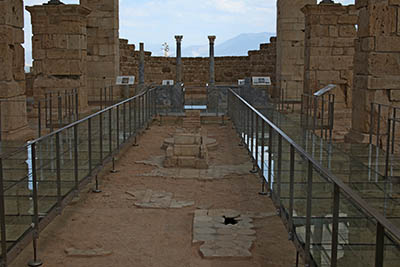
church-of-laodicea

The Church of Laodicea. Dated to the beginning of the fourth century C.E., the Church of Laodicea spanned an entire city block. The church faced east and was decorated with marble floors. Photo: © Mark R. Fairchild, Huntington University.

Laodicea remained an important city until the seventh century C.E. when it was struck by a devastating earthquake and subsequently abandoned. 

Imagine that? Jesus had some harsh words for this church, but in this revelation that I received from Daddy God, you will find that there is great grace even in our worst failings, and even for a church which was so summarily chastised as the church in Laodicea.

First, let's look at the passage as a whole.

14And unto the angel of the church of the Laodiceans write; These things saith the Amen, the faithful and true witness, the beginning of the creation of God;

15I know thy works, that thou art neither cold nor hot: I would thou wert cold or hot. 16So then because thou art lukewarm, and neither cold nor hot, I will spue thee out of my mouth. 17Because thou sayest, I am rich, and increased with goods, and have need of nothing; and knowest not that thou art wretched, and miserable, and poor, and blind, and naked: 18I counsel thee to buy of me gold tried in the fire, that thou mayest be rich; and white raiment, that thou mayest be clothed, and that the shame of thy nakedness do not appear; and anoint thine eyes with eyesalve, that thou mayest see. 19As many as I love, I rebuke and chasten: be zealous therefore, and repent. 20Behold, I stand at the door, and knock: if any man hear my voice, and open the door, I will come in to him, and will sup with him, and he with me. 21To him that overcometh will I grant to sit with me in my throne, even as I also overcame, and am set down with my Father in his throne. 22He that hath an ear, let him hear what the Spirit saith unto the churches.

First, it is important to establish that when Jesus communicates with the Seven Churches, He speaks specifically, directly to the "angel" of the church, i.e. the minister or the pastor of the church. Second, in other letters, Jesus does say that if the angels, the ministers do not repent, He will take their candle out (Revelation 2:5). This does not mean that the pastor or the members of the church will lose their salvation, It does mean that the pastor will lose his place and the church will close.

Around the world and over many decades, we have witnesses many churches close. They no longer preach the Gospel, the focus on man-made causes and concerns. They do not focus on Jesus, but rather on man and his efforts, or the perfection of man through his efforts. All of this is a clear abandon of the Gospel of Grace (Galatians 1:6) which we receive through Jesus Christ (John 1:17).

Now, let's look at what Jesus says to the church of Laodicea.

First, about the word "Laodicea" itself, the word means "The people rule." This name speaks to the types of churches in which the pastor panders to the people, giving into their demands, and also to the types of churches where man's interests, where the interests of the population, what is popular, take precendence instead of the Word of God. 

What is the first thing that Jesus says to Laodicean church?

I know thy works, that thou art neither cold nor hot: I would thou wert cold or hot.

Many of construed this passage to indicate that the church members were not on fire for God or cool and refreshing in what they had to offer.

Let's look further:

So then because thou art lukewarm, and neither cold nor hot, I will spue thee out of my mouth.

The word "lukewarm" in the Original Greek is:

chliaros: tepid, warm

Original Word: χλιαρός, ά, όν
Part of Speech: Adjective
Transliteration: chliaros
Phonetic Spelling: (khlee-ar-os')
Definition: tepid, warm
Usage: warm, tepid; of persons: lukewarm.

Thayer's dictionary provides more information:

χιλιαροςχιλιαραχιλιαρον (χλίω, to become warm, liquefy, melt), tepid, lukewarm: metaphorically, of the condition of a soul wretchedly fluctuating between a torpor and a fervor of love, Revelation 3:16. (HerodotusPindarDiodorusPlutarchAthen.Geoponica.)

What we have here is a church that is wavering, that is going back and forth between two extremes. A clear example of this occurs in the Galatian church, in which the Galatians went from grace back to law (Galatians 1:6, 3:3)

James warns about men who are double-minded, as well (James 1:8).

This wavering is all about going from grace to law, from faith to works, from trusting in the Lord's Finished Work to man's self-effort. That is what is happening here!

Then comes this very harsh pronunciation from our Lord Jesus:

[B]ecause thou art lukewarm, and neither cold nor hot, I will spue thee out of my mouth.

The King James Version gives off a harsh, inexorable stance from Jesus. The Greek more accurately reads "I am about to spit you out of my mouth,"

Jesus is about to, but He does not! Right away, that should inspire relief and respite for all who read this. Think aboout it, besides: if Jesus was going to spit out the pastor at the Church of Laodicea, why would He have bothered to send them a letter in the first place?

Consider how the New International Version renders this verse:

So, because you are lukewarm—neither hot nor cold—I am about to spit you out of my mouth.

Even when Jesus has to issue a stern warning to a pastor, He is all about grace. He wants to help them--He wants to help all of us even when we are lost in our self-serving delusions.

Next, Jesus says:

17Because thou sayest, I am rich, and increased with goods, and have need of nothing; and knowest not that thou art wretched, and miserable, and poor, and blind, and naked:

Ouch! Quite an indictment!

It does sound like some of the churches we see in our world today. Church leaders are talking a great deal about "Name it and Claim it," they share a great deal on tithe, tithing, and tithers. They even make the case that God does not bless you unless you give first. Of course, even the first mention of tithing in the Bible clearly illustrates that God blesses us, and then we tithe in response to His goodness! (Genesis 14)

Sadly, there are so many pastors and church leaders who assume that they are great and are all taken care of simply because they are wealthy, have lots of stuff, and they really think that they don't need anything. And yet they are:

1. Wretched: 5005 talaípōros (an adjective, derived from talaō, "to bear, undergo" and pōros, "a callous," J. Thayer) – properly, wretched (beaten-down) from continued strain, leaving a person literally full of callouses (deep misery) – describing a person with severe side-effects from great, ongoing strain (significant hardships).

Many people who boast in their wealth have relied on their own strength and have harmed themselves, their health, their families in the process. God's kind of prosperity never causes such harm:

"The blessing of the LORD, it maketh rich, and he addeth no sorrow with it." (Proverbs 10:22)

Amen! How silly for people to boast in their wealth, when it cost them so much more attain it through their own means. Besides, God's heart is for all of us to prosper and be in health--even as our soul prospers (3 John2).

2. Miserable: Cognate: 1652 eleeinós (from 1656, eleos, "mercy") – pitiable, wretched; in great need of mercy (because desperate).

This church leader thinks that they do not need more mercy, more grace, and yet Paul urges us to receive--and keep receiving--the abundance of grace and the gift of righteousness (Romans 5:17). Peter's last words urge his readers to "Grow in grace and knowledge of the Lord." (2 Peter 3:18).

3. Poor: 4434 ptōs (from ptōssō, "to crouch or cower like a beggar") – properly, bent over; (figuratively) deeply destitute, completely lacking resources (earthly wealth) – i.e. helpless as a beggar4434 (ptōxós) relates to "the pauper rather than the mere peasant, the extreme opposite of the rich" (WP, 1, 371).

Wow! What we find, then, is that this Laodicean church was truly "all talk." They said that they were rich, but in fact they actually were not! They had lots of pride, but in reality they were in great need!

4. blind: Thayer's Greek Lexicon

STRONGS NT 5185: τυφλός
τυφλόςτυφλοῦ (τύφω, to raise a smoke; hence, properly, 'darkened by smoke'), from Homer down, the Sept. for עִוֵּרblind;

Throughout the Bible, blindness is a sign not just of someone who cannot physically see, but more importantly represents someone who has forgotten that all of his sins have been forgiven:

"But he that lacketh these things is blind, and cannot see afar off, and hath forgotten that he was purged from his old sins." (2 Peter 1:9)

5. Nake: gumnos: naked, poorly clothed
Original Word: γυμνός, ή, όν
Part of Speech: Adjective
Transliteration: gumnos
Phonetic Spelling: (goom-nos')
Definition: naked, poorly clothed
Usage: rarely: stark-naked; generally: wearing only the under-garment; bare, open, manifest; mere.

When we think of nakedness, what comes to mind is not merely a lack of clothing in itself, but it reminds me of Adam and Eve, who became naked because their eyes were no longer looking at God's goodness and provision, but rather at themselves and their inadequacies in themselves. They wanted to depend on their own knowledge and wisdom, and what they found was inevitably inadequate.

Nakedness speaks to our sinful state in ourselves, our weakness on our own without Christ. In trusting ourselves with everything, we find ourselves lost, losing, and lacking in so many ways.

But Jesus does not stop there and just shame them for their current status.

18I counsel thee to buy of me gold tried in the fire, that thou mayest be rich; and white raiment, that thou mayest be clothed, and that the shame of thy nakedness do not appear; and anoint thine eyes with eyesalve, that thou mayest see. 

Now, this passage is confusing!

First, Jesus tells the messenger of the church that he is poor and blind and wretched (might as well as throw in 'sloppy, dumpy, and stupid.') And now Jesus is telling him to buy something from Him? And not just anything, but "gold tried in the fire" and "white raiment" and "eyesalve."

We are not talking about cheap goods here.

Let's take a look at the first part of the verse "I counsel thee to buy ..."

Counsel:

sumbouleuó: to take counsel together, advise
Original Word: συμβουλεύω
Part of Speech: Verb
Transliteration: sumbouleuó
Phonetic Spelling: (soom-bool-yoo'-o)
Definition: to take counsel together, advise
Usage: I give advice, exhort; mid: I take counsel together, consult.
HELPS Word-studies

4823 symbouleúō (from 4862 /sýn, "identify with" and 1011 /bouleúō, "to plan," which is derived from 1012 /boulḗ, "a resolute plan") – properly, to consult (counsel) together, like when people plan something out together with high resolve (keeping to their pre-set goals).

Jesus was not just on the outside giving advice. Here, Jesus is working with the pastor: "Let's do this together."

And what about that word "buy"?

agorazó: to buy in the marketplace, purchase

Original Word: ἀγοράζω
Part of Speech: Verb
Transliteration: agorazó
Phonetic Spelling: (ag-or-ad'-zo)
Definition: to buy in the marketplace, purchase
Usage: I buy.

HELPS Word-studies

59 agorázō (from 58 /agorá, "the ancient marketplace, town-center") – properly, to make purchases in the marketplace ("agora"), i.e. as ownership transfers from seller to buyer.

59 /agorázō ("acquire by purchasing") stresses transfer – i.e. where something becomes another's belonging (possession). In salvation-contexts, 59 (agorázō) is not redeeming ("buying back"), but rather focuses on how the believer now belongs to the Lord as His unique possession (J. Thayer). Indeed, Christ purchases all the privileges and responsibilities that go with belonging to Him (being in Christ).

We are not talking about a mere exchange of goods here. We are talking about a deeper revelation of Christ's redeeming work. In effect, one could more precisely translate the phrase:

"Agree with me to receive from me something that I have bought for you."

This verse, this revelation reminds me of Isaiah 55:

"1Ho, every one that thirsteth, come ye to the waters, and he that hath no money; come ye, buy, and eat; yea, come, buy wine and milk without money and without price.

2Wherefore do ye spend money for that which is not bread? and your labour for that which satisfieth not? hearken diligently unto me, and eat ye that which is good, and let your soul delight itself in fatness.

3Incline your ear, and come unto me: hear, and your soul shall live; and I will make an everlasting covenant with you, even the sure mercies of David." (Isaiah 55:1-3)

How exactly do we buy something 'without price'? We receive it by grace, through faith! YES!

Now, let's delve more deeply into what Jesus is provided to the Church in Laodicea:

Gold: that speaks of the Gift of righteousness, our sure foundation based on Jesus' Finished Work

The white raiment speaks of the Robe of righteousness, which clothes us, YES!

And what about the eyesalve?

Well, this is a very interesting word in the original Greek:

eyesalve:

kollourion: eye salve.

Original Word: κολλούριον, ου, τό
Part of Speech: Noun, Neuter
Transliteration: kollourion
Phonetic Spelling: (kol-loo'-ree-on)
Definition: eye salve
Usage: eye-salve.

kollurion: a small bread roll, an eye salve (shaped like a roll).

Transliteration: kollurion
Definition: a small bread roll, an eye salve (shaped like a roll)

What is the eyesalve for? Obviously, to heal a person's sight, soo that they can see clearly.

Notice also that this eyesale is the same word for bread, a small bread roll specifically. Where have we read about this connection between eating bread and seeing?

In The Gospel of Luke!

"30And it came to pass, as he sat at meat with them, he took bread, and blessed it, and brake, and gave to them. 31And their eyes were opened, and they knew him; and he vanished out of their sight." (Luke 24:30-31)

Here, we have the breaking of the bread, commmunion! When Cleopas and his wife broke the bread with Jesus in their midst, they saw HIM! They did not see their sins, they did not see their failures, they did not see their losses. They saw HIM!

And that is what Jesus is so determined to restore to the Laodicean church. They need to see Him. They need to see all their needs can only be met in Him. Their needs are far greater than food and cleathing. Consider what Jesus said to the Israelites of His day during His earthly ministry:

"25Therefore I say unto you, Take no thought for your life, what ye shall eat, or what ye shall drink; nor yet for your body, what ye shall put on. Is not the life more than meat, and the body than raiment?  ...33But seek ye first the kingdom of God, and his righteousness; and all these things shall be added unto you." (Matthew 6:25, 33)

The issue is righteousness! This righteousness is something that Jesus has purchased for us! In fact, not just any status of righteousness, but because of Jesus, we have been made the righteousness of God in Him! (2 Corinthians 5:21)

What was plaguing the Laodicean church? They thought that they were righteousness becaused of their great wealth and status. They were depending on their own efforts, and boasting in their own works. They did not have a revelation of the abundance of grace and the gift of righteousness (Romans 5:17). They had works, and they thought they were alive, but they were actually dead.


They were mixing up law and grace, trusting in their own efforts. This Galatian errror receives the harshest rebuke, and yet let us not forget that this church not only learned the lesson, received correction, but thrived for centuries afterwards. AMEN!